Yu-Gi-Oh! 2026 Expansion Wave: Why New Card Reveals Are Reshaping the TCG Investment Landscape
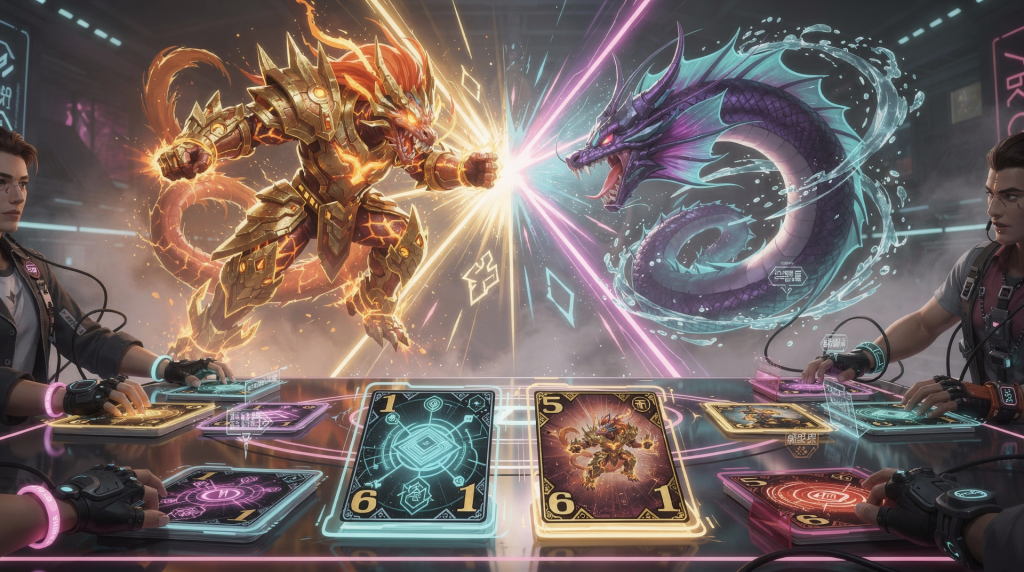
Three major Yu-Gi-Oh! card reveals dropped within a single 24-hour window in July 2026 — Akasuna the Battle Ashtra and Ashtraja Susanoo from the main OCG line, the Sennet archetype from the DBGV booster, and Star Protector support from Rush Duel set RD/KP26. Each reveal triggers the same financial reflex across the global TCG secondary market: speculators move first, collectors move second, and retail shelves clear before most casual players even read the card text. This is the machine that now drives a trading card market valued in the billions.
The Reveal Cycle and Why Collectors Care
Yu-Gi-Oh! operates one of the most relentless release cadences in the trading card game industry. The OCG — the Japanese-market variant — routinely previews cards weeks or months ahead of their Western counterparts, creating an arbitrage window that sophisticated collectors and investors exploit with precision. The July 14, 2026 reveal cluster is a textbook example: Akasuna the Battle Ashtra, described in official lore as “a brave hero who carries the power of the god of war Konjin,” arrives with full reference art that signals a high-rarity print treatment. Reference art drops of this nature historically precede Secret Rare and Quarter Century Secret Rare variants that command multiples of their base card price on the secondary market within days of a set going live.
The Sennet archetype, introduced through the DBGV booster series, adds another layer of collector intrigue. The card theme draws on the ancient Egyptian board game Senet — a culturally loaded motif that resonates with the franchise’s long-standing Egyptian mythology roots dating back to the original Duel Monsters era. Cards with thematic callbacks to the IP’s foundational lore have demonstrated sustained secondary market demand compared to mechanically similar cards with neutral aesthetics. The design note that Sennet does not interact with “Senet Switch” — localized in Japan using the literal English words “Position Change” in katakana — also signals deliberate archetype isolation, a design philosophy that tends to suppress competitive ceiling but concentrate collector demand among theme purists.
Rush Duel’s RD/KP26 set, meanwhile, introduces the Star Protector support line anchored by the Level 4 WATER Spellcaster “Kyuusei no Kyougeki Slay.” Rush Duel as a format remains predominantly a Japanese domestic product, which makes sealed product from this series particularly attractive to international collectors — lower print distribution outside Japan creates natural scarcity without any artificial supply manipulation required.
Reference art reveals for high-profile OCG monsters consistently precede 200–600% secondary market price spikes on the specific cards once graded copies hit PSA and CGC population reports. Akasuna the Battle Ashtra’s mythology-heavy lore framing places it squarely in the category of cards that attract both competitive players and lore collectors simultaneously — the most dangerous demand combination for anyone trying to acquire copies at or near print price.
Market Context: TCG Cards as Investable Assets
The broader trading card investment market has matured considerably since the 2020–2021 speculative frenzy that pushed Pokémon booster boxes and graded singles into territory previously reserved for fine art. Yu-Gi-Oh! was slower to attract mainstream speculator capital, but that changed structurally around 2022 when Quarter Century Secret Rare variants — printed exclusively in 25th Anniversary sets — began commanding prices between $500 and $3,000 per single card for tournament-relevant monsters. The market has since institutionalized: organized speculation groups monitor OCG spoiler sites, pre-position on singles within hours of reveals, and exit into retail demand once Western print dates are confirmed.
What separates Yu-Gi-Oh! from Pokémon as an investment vehicle is the dual demand engine: competitive playability and collector aesthetics operate independently. A card can be completely unplayable in tournament formats and still hold or appreciate in value purely on art quality, rarity tier, and IP nostalgia. The Sennet archetype demonstrates this clearly — a board-game-themed Egyptian mythology callback with a competitive ceiling limited by deliberate design isolation will still attract buyers who want the complete set for display purposes.
Rush Duel product occupies a distinct niche. Because the format does not have a robust international competitive scene, sealed Rush Duel boxes function almost exclusively as collectibles rather than as sources of playable singles. This compresses the demand profile but dramatically reduces the risk of value erosion from format bans — a major hazard in standard Yu-Gi-Oh! investing.
Key Cards and Sets to Watch
OCG main set release with full reference art reveal. War-god mythology framing and high-rarity print treatment expected. Dual collector and competitive demand profile makes this a primary target for graded speculators ahead of Western localization.
Paired reveal alongside Akasuna. Susanoo deity naming carries established premium recognition among Japanese mythology collectors. Two-card reveal bundles of this type typically produce set-chase dynamics that inflate sealed box demand on DBGV release day.
Egyptian board-game-themed cards from the DBGV booster. Deliberate archetype isolation limits competitive utility but concentrates lore-collector demand. Sealed DBGV boxes are the primary investment vehicle given multiple high-profile archetype introductions in the same product.
Rush Duel set with limited international distribution. Level 4 WATER Spellcaster support anchors the set. Sealed boxes function as pure collectibles with scarcity driven by domestic-only print allocation rather than competitive demand.
The Investment Angle: Graded Singles vs. Sealed Product
The decision point for TCG investors entering the Yu-Gi-Oh! market on the back of these reveals comes down to two strategies: grade individual high-rarity singles, or hold sealed product. Each path carries a distinct risk-reward profile. Graded singles — particularly PSA 10 copies of Secret Rare and Quarter Century Secret Rare variants — have demonstrated the strongest price appreciation on a per-card basis, but the grading pipeline now runs 45 to 90 days for standard submissions, creating exposure to meta shifts and reprint announcements during the hold period.
Sealed booster boxes from sets like DBGV offer exposure to multiple potential chase cards simultaneously, but box prices have front-run reveals aggressively in 2025 and 2026. A sealed DBGV box trading at an estimated $400 or above before confirmed pull rates are publicly available represents a meaningful speculative premium over expected single card value — a premium that only holds if multiple chase cards in the set maintain their pre-release hype pricing post-launch.
PSA population counts for Yu-Gi-Oh! Quarter Century Secret Rares remain dramatically lower than equivalent Pokémon grades, meaning even modest collector demand can move prices sharply. A PSA 10 population of fewer than 200 copies on a tournament-relevant card has historically supported four-figure price floors in the current market environment.
Release Timeline: 2026 Expansion Wave
-
July 14, 2026Simultaneous reveal of Akasuna the Battle Ashtra, Ashtraja Susanoo reference art, Sennet archetype (DBGV), and Star Protector support (RD/KP26). Secondary market pre-sale activity initiates within hours of spoiler publication.
-
Q3 2026 — OCG Release WindowDBGV booster and RD/KP26 Rush Duel set expected to hit Japanese retail. Sealed box prices typically peak in the 7–14 day window post-release before pull rate data normalizes market expectations.
-
Q4 2026 — Western LocalizationTCG equivalents of top OCG cards anticipated for North American and European market release. Localization often introduces name changes and set code reconfigurations that affect cross-regional arbitrage positions.
-
Q1 2027 — Graded Population BuildupFirst significant PSA and CGC graded populations from Q3 2026 releases expected to surface on auction platforms. This window historically determines whether pre-release speculation translates into sustained value or corrects sharply.
Yu-Gi-Oh! carries a reprint risk that is structurally higher than most competing TCGs. Konami has demonstrated willingness to reprint even recently released high-value cards through tournament prize packs, special edition bundles, and anniversary sets with minimal market warning. A single reprint announcement can collapse the secondary market value of a card by 60–80% within 48 hours. Investors holding graded copies of cards that get reprinted in a more accessible rarity face permanent impairment, not temporary drawdown. The Rush Duel segment carries lower reprint risk due to format isolation, but offers correspondingly limited liquidity if an exit is needed quickly.
The Reveal Cycle Is the Asset — Position Accordingly
The July 2026 Yu-Gi-Oh! reveal cluster confirms that the OCG expansion pipeline remains one of the most active card-reveal engines in the global TCG market. Akasuna the Battle Ashtra and Ashtraja Susanoo carry the dual collector-competitive demand profile that has historically produced the strongest graded single returns. The Sennet archetype represents a lower-risk, lower-ceiling collector play suited to theme investors rather than flip traders. Rush Duel’s RD/KP26 is a scarcity-driven sealed product hold — not a singles market.
Watch for DBGV sealed box prices in the two weeks post-Japanese release and monitor PSA population reports for Quarter Century Secret Rare variants from both this set and concurrent releases. The critical inflection point arrives when Western localization dates are confirmed — that announcement window is where the informed investor either locks in gains or doubles exposure based on graded population data available by that time.
This article is for informational purposes only and does not constitute financial advice. Always conduct your own research before making investment decisions.