Twin Shockwaves: Ukraine Ceasefire Chaos and Riyadh Airport Strikes Detonate Global Energy Markets
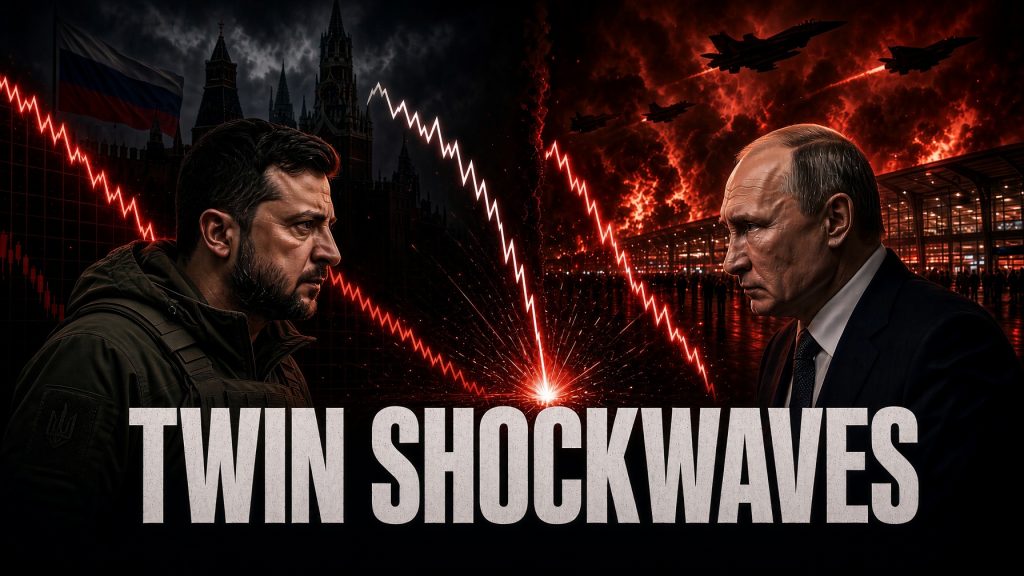
On October 11, 2026, two geopolitical detonations hit simultaneously — a unilateral White House announcement of a partial Ukraine energy ceasefire that Kyiv’s own president publicly disowned, and a second Houthi missile strike on Riyadh’s King Khalid International Airport following an already deadly initial attack. Together, these events have injected maximum uncertainty into global energy supply chains, sovereign risk models, and commodity pricing at a moment when markets had priced in relative stability. The world’s two most volatile conflict corridors lit up on the same day.
What Happened — And Why It Matters
The Trump administration announced a partial ceasefire agreement targeting energy infrastructure in the Ukraine conflict — a deal framed in Washington as a breakthrough in de-escalation diplomacy. The catch: Ukrainian President Volodymyr Zelenskyy stated flatly that the arrangement was “news to me.” That single phrase exposed the fracture at the center of Western strategic unity. A ceasefire that one of its primary parties has not agreed to is not a ceasefire — it is a unilateral declaration with no binding operational force on the battlefield.
The implications are immediate and severe. Energy markets had been watching the Ukraine front for any signal that natural gas transit routes and power generation infrastructure would receive protected status. A genuine agreement would have provided a meaningful floor under European energy security heading into winter. Instead, what markets received was diplomatic theater with no Ukrainian signature — leaving European gas storage calculus, grid stability projections, and LNG import demand forecasts entirely unchanged from their worst-case trajectories.
Simultaneously, Saudi Arabia confirmed that Riyadh’s King Khalid International Airport was struck a second time by Houthi missile fire on October 11, following a deadly initial strike the same day. The Saudi-led coalition indicated retaliatory action was underway, but the back-to-back strikes on the kingdom’s primary aviation hub — located in its capital — represent a dramatic escalation in the Houthi campaign’s geographic reach and ambition. Saudi Arabia produces approximately 9 million barrels of oil per day, making any sustained threat to its infrastructure an immediate global supply concern.
Two successive Houthi missile strikes on Riyadh’s main international airport on a single day marks the most direct attack on Saudi capital infrastructure in the conflict’s recent history — a threshold crossing that changes the risk premium calculation for Gulf energy assets across the board.
Economic Context
Europe entered the 2026 heating season already navigating elevated energy costs following successive years of supply disruption from the Ukraine conflict. Natural gas prices on the continent had moderated from their 2022 crisis peaks, but storage levels heading into Q4 2026 remain a focal point for energy ministers and institutional investors alike. A genuine Ukraine energy ceasefire — one agreed to by all parties — would have represented a material tailwind for European industrial competitiveness and inflation management. The collapse of that narrative before it could even take hold removes a potential catalyst for European equity and currency stabilization.
The Saudi dimension compounds the energy risk picture. The Arabian Peninsula accounts for roughly 30% of global seaborne crude exports. Saudi Arabia’s GDP runs at approximately $1.1 trillion annually, with oil revenues constituting the backbone of Vision 2030 financing and regional geopolitical leverage. Any prolonged or escalating Houthi campaign against Saudi infrastructure — including aviation and energy nodes — introduces a supply shock variable that OPEC+ cannot easily offset through production adjustments alone.
The dual crisis also complicates the Federal Reserve’s and European Central Bank’s inflation outlooks. Energy price spikes feed directly into headline CPI with a lag of four to eight weeks, and central bankers who had been cautiously signaling the potential for further rate normalization now face a renewed commodity wildcard. Markets pricing rate cuts into early 2027 may be forced to reprice that timeline if crude and gas move materially higher on sustained geopolitical risk premium.
Saudi Arabia’s oil revenues fund the entirety of Vision 2030 — a $500 billion-plus national transformation program. Sustained infrastructure attacks that disrupt output or investor confidence in the kingdom’s security environment could force a fiscal recalculation with global sovereign debt market consequences.
Timeline of Escalation
- Oct 11, 2026 — MorningHouthi forces launch a deadly missile strike against Riyadh’s King Khalid International Airport, causing casualties and significant infrastructure disruption.
- Oct 11, 2026 — MiddayTrump administration announces a partial ceasefire framework targeting energy infrastructure in the Ukraine conflict, presenting it as a diplomatic win.
- Oct 11, 2026 — AfternoonPresident Zelenskyy publicly states the ceasefire announcement is “news to me,” immediately undermining the White House’s framing and signaling zero Ukrainian consent.
- Oct 11, 2026 — EveningSaudi authorities confirm a second Houthi missile strike on Riyadh airport. Saudi-led coalition announces retaliatory military action against Houthi positions.
Key Stakeholders
Announced a unilateral energy ceasefire framework for Ukraine without verified Ukrainian agreement. Washington’s credibility as a peace broker is now directly on the line, with allies demanding clarity on whether the deal has any operational basis.
Publicly disavowed the ceasefire announcement, creating a real-time diplomatic rupture with its primary military and financial backer. Kyiv’s negotiating posture — and its access to continued Western support — now enters a period of acute uncertainty.
Absorbing back-to-back strikes on its capital’s main airport, the kingdom faces a direct test of its air defense architecture and its ability to project security for foreign investors critical to Vision 2030 financing timelines.
Executing a dramatically escalated campaign with strikes reaching Riyadh itself — a strategic signal to regional powers and global energy markets that the conflict has entered a new phase of geographic ambition and missile capability.
The Investor Angle
For energy traders, the dual-crisis day of October 11 is a forced repricing event. Brent crude risk premiums, which had compressed through Q3 2026 as traders bet on geopolitical de-escalation in both theaters, must now be rebuilt to account for the reality that neither conflict is trending toward resolution. Long positions in European natural gas — predicated on a genuine Ukraine energy truce — face immediate recalibration. Short volatility strategies in Gulf-linked energy names are now exposed.
Defense sector equities and military industrial supply chains tied to both Saudi Arabia and NATO member states are the obvious near-term beneficiaries. Saudi retaliation against Houthi positions will require sustained munitions resupply from allied partners. The Ukraine theater — regardless of Washington’s stated ceasefire intent — continues to consume artillery, air defense systems, and drone technology at rates that keep defense procurement backlogs elevated well into 2027 and 2028.
Currency markets will track the dollar’s safe-haven demand closely. A genuine risk-off move — driven by the confluence of Middle East escalation and collapsed European energy diplomacy — typically drives dollar strength, yen strength, and pressure on emerging market currencies with energy import dependencies. Countries in South and Southeast Asia running current account deficits financed partly by cheap energy import assumptions face renewed fiscal pressure if crude moves above key resistance levels.
The combination of a diplomatically disowned Ukraine ceasefire and escalating Houthi attacks on Saudi capital infrastructure creates a compound risk scenario that energy models had not fully priced. If Russia interprets the ceasefire confusion as a weakening of Western resolve — and if Houthi missile capability continues to reach high-value Saudi targets — the probability of a simultaneous dual-theater energy supply disruption entering winter 2026–2027 rises materially. European policymakers have no viable short-term substitute for either Russian pipeline gas or Gulf crude at scale.
Dual-Theater Chaos Resets the Geopolitical Risk Premium for Energy Markets
October 11, 2026 is a watershed session for global risk pricing. The Trump administration’s unilateral Ukraine ceasefire announcement — publicly rejected by Zelenskyy within hours — does not reduce conflict exposure; it increases diplomatic incoherence, which markets price as uncertainty rather than relief. Meanwhile, Houthi forces striking Riyadh’s international airport twice in a single day represents a capability and intent threshold that the Gulf security premium had not fully accounted for. Saudi Arabia’s response posture and the integrity of its infrastructure will be the dominant energy market variable through Q4 2026.
Watch for: Brent crude and European TTF natural gas benchmark moves in the sessions immediately following October 11; any formal NATO or EU statement on the Ukraine ceasefire’s legitimacy; Saudi Aramco operational status updates from King Khalid International Airport’s logistics chain; and Federal Reserve communications that acknowledge renewed energy-driven inflation risk. The window for orderly rate normalization in 2027 just got measurably narrower.
This article is for informational purposes only and does not constitute financial advice. Always conduct your own research before making investment decisions.