Yu-Gi-Oh! TCG’s 2026-2027 Prize Cards & New Set Reveals Signal Collector Opportunity as Alternative Asset Class Heats Up
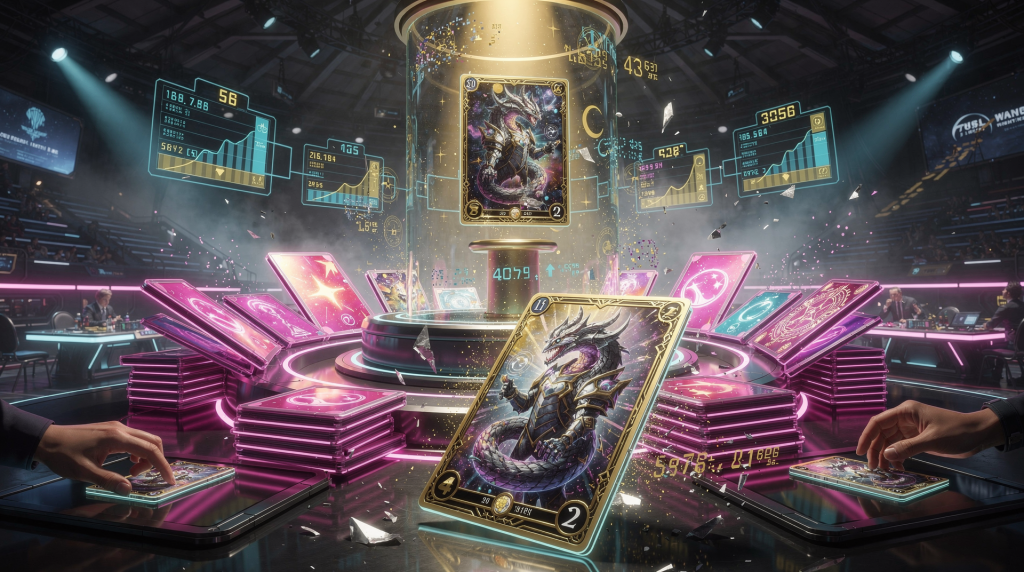
Yu-Gi-Oh! is no longer just a children’s card game — it is a structured alternative asset class generating five-figure auction results, tournament-exclusive ultra-rares commanding premiums that rival graded Pokémon singles, and a 2026-2027 competitive season whose prize card ecosystem is already being dissected by collectors and speculators alike. Three major product developments dropping simultaneously — the RD/KP26 Rush Duel expansion, the DBGV main set featuring “Raise Moon Veil Cielo,” and the newly unveiled 2026-2027 YCS Day 2 Prize Pack — are reshaping the collector calculus right now.
The Story — Why Collectors Are Paying Attention Right Now
Three separate product announcements dropped within a 24-hour window in August 2026, and each one carries distinct implications for the secondary market. The first is the confirmation of RD/KP26-JP063, a Normal Trap card titled “Wise Salvation Rescue” — catalogued within the Rush Duel product line. Rush Duel, the simplified variant of Yu-Gi-Oh! originally designed for the Japanese domestic market and the SEVENS anime, has developed its own collector niche entirely separate from the main TCG. Cards exclusive to Rush Duel sets carry a geographic scarcity premium, as Western availability remains limited and import costs add a structural floor to secondary pricing.
The second announcement centers on DBGV-JP016, “Raise Moon Veil Cielo” — a Level 7 LIGHT Spellcaster Effect Monster with a symmetrical 2100 ATK and 2100 DEF stat line. The DBGV code designates this as part of a Deck Build-style product, a format historically associated with lower print runs and higher per-card secondary values relative to main booster sets. The card’s triple-effect clause — a self-limiting “you can only use this card name’s (3)” restriction — signals competitive utility, and competitive utility is the single most reliable short-term price driver in the Yu-Gi-Oh! secondary market.
The third and arguably most investment-relevant announcement is the 2026-2027 YCS Day 2 Prize Pack reveal. Day 2 prize cards occupy a uniquely privileged position in the Yu-Gi-Oh! collector hierarchy: they are awarded exclusively to players who advance past Day 1 at a Yu-Gi-Oh! Championship Series Advanced or Genesys Main Event, meaning total population is permanently capped by tournament attendance and competitive performance. Unlike booster pulls, no amount of money spent at retail can replicate a prize card’s acquisition path — and that scarcity narrative is exactly what drives graded specimen pricing into the hundreds and, for marquee events, the thousands of dollars.
Tournament prize cards represent the hardest supply cap in the Yu-Gi-Oh! ecosystem. Population counts on graded prize card specimens are often in the single or low double digits globally, placing them in the same scarcity tier as PSA 10 Pokémon base set holos — but with a fraction of the mainstream awareness, meaning pricing inefficiency still exists for informed buyers.
Market Context — Trading Cards as an Asset Class in 2026
The broader trading card investment market has matured significantly since the 2020-2021 bubble, which saw Pokémon sealed product appreciate 400-600% in under 18 months before correcting sharply. What replaced the speculative frenzy is a more structured collector economy — one segmented by game, rarity tier, grading status, and competitive relevance. Yu-Gi-Oh! specifically has benefited from this maturation because its cards carry dual utility: they function both as collectibles and as tournament-legal game pieces, meaning demand never fully decouples from gameplay even during collector-market downturns.
The alternative investment community has taken notice. Graded card platforms have reported consistent volume growth in Yu-Gi-Oh! submissions through 2025 and into 2026, driven in part by a younger demographic of collectors who were priced out of the Pokémon blue-chip market and turned to Yu-Gi-Oh! as the next undervalued frontier. One Piece TCG and Union Arena have also drawn speculative capital, particularly from collectors tracking Japanese-exclusive print windows. Cyberpunk Red’s physical card product has carved a niche in the tabletop-adjacent collector space. But Yu-Gi-Oh!’s sheer catalog depth — over 12,000 unique card names across nearly three decades of printing — means that information asymmetry remains one of the highest of any game, rewarding research-intensive investors disproportionately.
Key Cards & Sets to Watch
Normal Trap card from the Rush Duel KP26 expansion. Geographic exclusivity and Rush Duel’s growing collector niche assign a structural import premium. Low domestic print awareness amplifies upside for early acquirers.
Level 7 LIGHT Spellcaster, 2100/2100, confirmed triple-effect architecture. Deck Build set format implies constrained print runs. Competitive viability in Spellcaster-adjacent strategies could trigger rapid secondary market movement post-release.
New cycle of tournament-exclusive promotional cards awarded to Day 2 qualifiers at YCS Advanced and Genesys Main Events. Population permanently capped by competitive performance — the hardest scarcity guarantee in the game.
The broader KP26 product line carries collector appeal beyond individual key cards. Rush Duel sealed boxes from prior sets have appreciated as the format expands its footprint outside Japan, creating a precedent for KP26 sealed appreciation.
Raise Moon Veil Cielo’s release via a Deck Build product format is significant: these sets typically feature higher-quality cardstock and foiling processes, which historically yield elevated PSA 10 and BGS Black Label rates compared to standard booster pulls. Higher grade populations command exponentially higher premiums at auction — a single PSA 10 can trade at 5-10x the raw card price for competitive staples.
The Investment Angle — How Money Moves in Yu-Gi-Oh!
Understanding Yu-Gi-Oh! as an investment requires mapping three distinct price drivers that operate simultaneously and often independently. The first is competitive meta relevance — when a card becomes a staple in top-tier tournament decks, demand spikes within days of the first major event results. DBGV-JP016’s triple-effect architecture and Spellcaster typing place it squarely in the zone of potential meta relevance, pending post-release tournament data from Japanese events, which typically precede Western regional adoption by six to eight weeks.
The second driver is collector nostalgia and IP strength. Cards tied to iconic characters or memorable anime moments — even mechanically unremarkable ones — sustain long-term value floors independent of gameplay. “Wise Salvation Rescue” from RD/KP26 carries a thematic resonance with the SEVENS/Go Rush!! storyline, which maintains a dedicated fanbase that will absorb supply regardless of competitive utility.
The third driver — and the most structurally reliable — is event exclusivity. The 2026-2027 YCS Day 2 Prize Pack cards enter a market where prize card precedents have been firmly established. Prior-season Day 2 prize card variants of high-demand staples have sold in graded condition for $200 to over $1,500 depending on card identity, event prestige, and grade. The new cycle resets the acquisition window, and early intelligence on which cards are included creates an immediate speculative premium for connected collectors.
- August 10, 20262026-2027 YCS Day 2 Prize Pack officially revealed. New competitive season prizing cycle begins for YCS Advanced and Genesys Main Events — opening the acquisition window for tournament-exclusive promotional card variants.
- August 11, 2026DBGV-JP016 “Raise Moon Veil Cielo” confirmed as Level 7 LIGHT Spellcaster with 2100/2100 stats and competitive triple-effect clause. Deck Build format print constraints noted by the secondary market immediately.
- August 11, 2026RD/KP26-JP063 “Wise Salvation Rescue” revealed within the Rush Duel KP26 expansion. Import premium activates for Western collectors tracking Japanese-exclusive Rush Duel product.
- Q4 2026 (Projected)First YCS Advanced events of the 2026-2027 season. Day 2 prize pack cards enter circulation — graded specimen prices expected to establish rapidly as PSA/BGS submissions begin flowing.
- 2027 OnwardDBGV tournament meta impact crystallizes. If Raise Moon Veil Cielo achieves staple status, graded copies from the initial print window become the premium acquisition target.
Yu-Gi-Oh!’s ban list — updated quarterly — is the single largest idiosyncratic risk for individual card investment. A card banned or limited to one copy per deck can lose 60-90% of its secondary market value within 48 hours of a list announcement, regardless of graded status or prior price history. Additionally, Konami has demonstrated willingness to reprint high-value cards into lower-rarity products, effectively flooding supply and compressing prices on previously scarce specimens. Rush Duel’s Japan-exclusive distribution model also introduces currency risk and import logistics complexity for Western collectors building positions in KP26 product.
Broader TCG Alternative Investment Landscape
Yu-Gi-Oh! does not operate in a vacuum. The trading card alternative investment market in 2026 is a multi-game ecosystem where capital rotates based on new product cycles, IP events, and media catalysts. Pokémon remains the benchmark — a PSA 10 Base Set Charizard still anchors the market’s credibility as a genuine alternative asset — but the outsized gains of the early 2020s have compressed future upside for new entrants at the top of that market. One Piece TCG has emerged as the fastest-growing collector game globally, driven by the franchise’s unrelenting media presence and the scarcity architecture of its premium Secret Rare print ratios. Union Arena, Bandai’s crossover card game, carries exposure to multiple anime properties simultaneously, creating diversified IP risk within a single product ecosystem. Cyberpunk Red physical cards appeal to a tabletop RPG-adjacent collector who values thematic coherence over tournament meta dynamics — a different buyer profile entirely, but one that has proven willing to pay premiums for limited-edition campaign-specific items.
Against this backdrop, Yu-Gi-Oh!’s prize card ecosystem is arguably the most defensible scarcity story in trading cards today — because supply caps are enforced by real-world competitive performance rather than publisher print decisions. No number of additional sets can create new copies of a 2026-2027 YCS Day 2 prize card after the season concludes. That permanence of scarcity is a feature that no other asset class outside of physical commodities and real estate can reliably replicate.
Prize Cards & New Set Reveals Position Yu-Gi-Oh! as the TCG Market’s Most Compelling Asymmetric Opportunity
The simultaneous emergence of RD/KP26, DBGV, and the 2026-2027 YCS prize cycle creates a rare convergence of near-term catalysts across multiple segments of the Yu-Gi-Oh! collector market. Raise Moon Veil Cielo’s competitive architecture and constrained print format make it the highest-priority single to track in the coming weeks — if Japanese tournament results validate its meta viability, the price window for entry closes fast. Rush Duel’s KP26 product benefits from ongoing geographic scarcity, and the prize pack’s permanently capped population makes it the most structurally sound long-term hold of the three.
Watch for first Japanese tournament results featuring DBGV cards, the first YCS Advanced Day 2 qualifier lists that confirm prize pack card identities, and any Konami reprint announcements that could suppress DBGV singles values

Konami Drops Rush Duel’s “Limited Pack: Another Style Edition” — Evil HERO Makes Its Rush Duel Debut
Yu-Gi-Oh! OCG Confirms “Rarity Collection: Climax Scene Edition” — 80-Card Set Drops February 27, 2027 With Grand Master Rares and Over Frame Reprints

Yu-Gi-Oh! Asian English October 2026 Banlist Drops PSY-Frame Lord Omega to Zero, Hits Five More Cards
Blockchain news
Markets, on-chain and the desk's reporting in your inbox each morning.