The Edinburgh Fringe Economy: How Britain’s Largest Arts Festival Became a £300M Financial Juggernaut Under Pressure
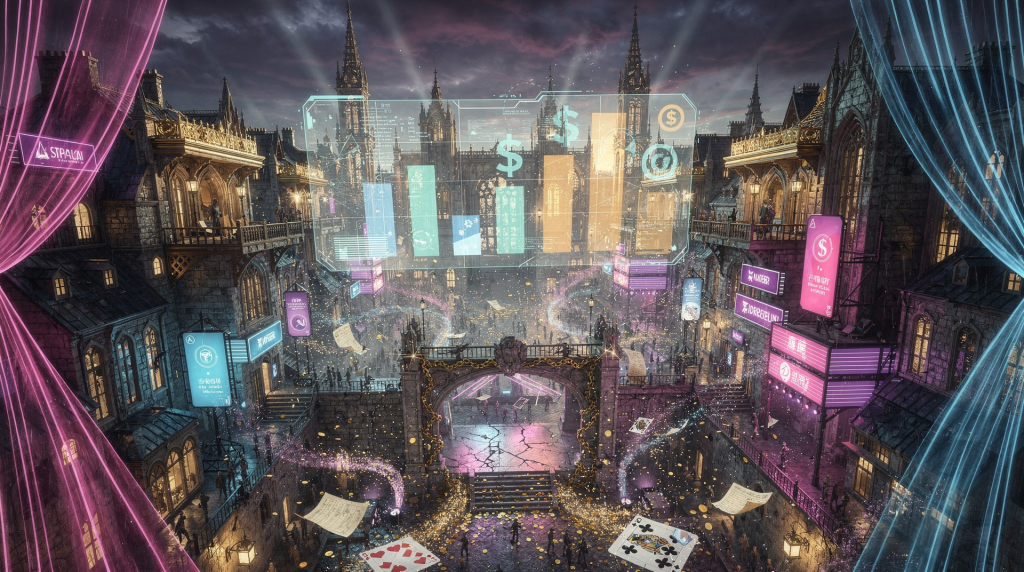
The Edinburgh Festival Fringe — the world’s largest arts festival — generates an estimated £300 million in annual economic activity for the Scottish capital, yet the institutional machinery underpinning it is fracturing under the combined weight of post-pandemic cost inflation, venue consolidation, and a deepening affordability crisis that is quietly pricing out the emerging talent the festival was built to platform.
What Happened — and Why the Money Matters
The Edinburgh Festival Fringe, now in its 2026 edition, has reached a structural inflection point. What began in 1947 as eight uninvited acts performing on the margins of the Edinburgh International Festival has metastasized into a commercial ecosystem spanning more than 3,500 registered shows, hundreds of venues, and an August-long economic injection that Edinburgh’s hospitality, transport, and property sectors have come to depend on with near-total reliability. The festival’s £300 million gross economic contribution to Scotland makes it one of the most concentrated cultural-economic events anywhere in the world — comparable in density of spend per square mile to major sporting finals, but sustained across 25 continuous days.
Yet beneath the headline numbers, a structural stress fracture has been widening for several years. Venue hire costs in Edinburgh have risen sharply since 2020, with central city spaces commanding premiums that have effectively locked out independent performers without institutional backing or personal capital reserves. Industry-side analysis consistently finds that upwards of 70% of Fringe participants lose money on the experience — absorbing venue fees, accommodation costs running at two to three times standard Edinburgh rates, and flyering and marketing expenditure that can add hundreds of pounds per week to an already punishing outlay.
Edinburgh’s population of roughly 530,000 absorbs an estimated 3 million visits during the August festival period. Hotel and short-let accommodation rates in the city centre routinely exceed £300 per night — more than double the annual city average — creating a secondary real estate arbitrage layer that extracts significant value from both performers and audiences simultaneously.
The Structural Cost Crisis
The affordability problem is not incidental — it is systemic. Venue operators, themselves facing elevated property costs, energy bills that have not meaningfully retreated to pre-2022 levels, and staffing pressures driven by tighter UK immigration policy and minimum wage increases, have passed costs downstream to performers. A standard one-hour slot in a mid-tier Fringe venue now requires performers to either accept a box-office split that historically averages 70-30 in the venue’s favour, or pay guaranteed flat hire fees that can reach £800 to £1,500 per week for rooms holding fewer than 100 seats. When accommodation, travel, and production costs are layered on top, a solo comedian or theatre maker arriving for the full festival run can expect to spend between £8,000 and £15,000 with no guaranteed return.
This arithmetic has direct consequences for the diversity and renewal of British cultural production. The Fringe has historically operated as the primary launchpad for generations of British comedy and theatre talent — careers that went on to generate substantial television, film, and live touring revenues. The commercialisation of access to that launchpad now disproportionately advantages performers with existing financial backing, inherited wealth, or the support of major production companies, systematically disadvantaging first-generation artists from lower-income backgrounds.
Comedy veterans who broke through via the Fringe in earlier decades have noted publicly that the financial conditions they navigated in the 1980s and 1990s — challenging as they were — bear little resemblance to the capital requirements facing debut performers in 2026. The gatekeeping mechanism has shifted from artistic to financial.
Key Stakeholders Shaping the Festival Economy
Consolidated venue groups now control a significant share of the most commercially viable Fringe spaces, operating as quasi-landlords extracting guaranteed revenue regardless of individual show performance. Their pricing power has increased substantially as performer demand outstrips available space.
The local authority collects substantial business rates and licensing revenue from the festival while managing intensifying tension between year-round resident quality of life and the economic dependency on August footfall. Noise, waste, and short-let housing displacement are active political flashpoints.
Public arts funding bodies face pressure to subsidise performer participation costs as a diversity measure, but constrained budgets — UK arts funding has declined in real terms since 2010 — limit the scale of intervention possible. Targeted bursary schemes exist but are chronically oversubscribed.
Digital platforms now scout the Fringe aggressively as a low-cost talent identification mechanism, capturing value from the festival ecosystem without contributing to its cost base. Commission deals for standout performers can reach six figures, amplifying the winner-takes-most dynamic.
The Investor Angle — Cultural IP as an Asset Class
For capital allocators with exposure to media, entertainment, and intellectual property, the Fringe represents a structurally important talent origination market. Comedy and performance IP originating from the festival ecosystem feeds directly into streaming content deals, live touring businesses, book publishing, and branded partnership revenues. The aggregate commercial value of careers launched or materially advanced at the Fringe across any given decade runs into the billions — a return profile that dwarfs the festival’s own operational budget many times over.
The consolidation dynamic in venue operation mirrors patterns seen across other creative infrastructure markets: as fixed costs rise and operators seek predictable revenue, the festival’s open-access founding model is gradually replaced by a tiered system in which access to the highest-visibility platforms is effectively auctioned. For investors tracking UK creative economy exposure, the sustainability of this origination pipeline — and the risk that it narrows or relocates — is a material consideration. Alternative festival circuits in Manchester, Brighton, and internationally in Melbourne and Montreal are actively positioning to absorb talent priced out of Edinburgh.
Timeline: The Fringe Economy Under Pressure
- Pre-2020Fringe costs are high but manageable for determined independent performers. Venue splits and accommodation costs create barriers, but the ecosystem supports a broad diversity of participants across income levels.
- 2020–2021The festival is cancelled and then severely curtailed during the pandemic. Venue operators absorb significant losses. Post-pandemic reopening costs are passed directly to hirers, marking a structural step-change in pricing.
- 2022–2023Energy and staffing cost surges compound venue operator pressures. Edinburgh short-let market tightens as the city moves to regulate Airbnb-style lettings, reducing supply and pushing accommodation prices to record levels during August.
- 2024–2025Industry-wide debate intensifies around performer welfare, cost transparency, and the long-term sustainability of the open-access model. Multiple established performers speak publicly about the financial unsustainability of the current structure.
- August 2026The 2026 Fringe proceeds with record registered show numbers but with escalating concern from industry veterans that the visible output masks a thinning of socioeconomic diversity in the performer base. Structural reform conversations reach policymaker level.
If the affordability crisis is not addressed through structural intervention — whether via public subsidy, venue regulation, or alternative funding models — the Fringe risks accelerating a feedback loop in which only financially cushioned performers can participate, progressively narrowing the cultural and demographic range of British comedy and theatre at source. The long-run cost to the UK’s creative export economy, which contributes approximately £116 billion annually to GDP, could be significant and largely invisible until the talent pipeline shows measurable decline.
A £300M Machine Consuming Its Own Foundations
The Edinburgh Festival Fringe remains one of the most economically productive cultural events on the planet, compressing extraordinary volumes of creative commerce into a single city over 25 days. But the mechanisms that extract that value — venue consolidation, accommodation arbitrage, media platform scouting — are progressively decoupled from the mechanisms that produce it. The open-access democratic model that generated the talent pipeline is being quietly dismantled by market forces that the festival’s governance structure was never designed to resist.
Watch for movement on three fronts: Edinburgh City Council’s ongoing review of short-let regulation and its impact on August accommodation supply; any expansion of public arts bursary programmes targeting first-time Fringe participants; and the pace at which competing regional and international festival circuits absorb talent priced out of the Edinburgh market. The creative economy’s most important talent origination market is under structural stress. The question is whether intervention arrives before the pipeline narrows beyond recovery.
This article is for informational purposes only and does not constitute financial advice. Always conduct your own research before making investment decisions.














































The 70-30 box office split explains why 70% of performers lose money before a single ticket sells. Venue operators aren’t taking on show risk anymore, they’ve engineered a model where they get paid regardless of turnout. That’s not a festival struggling with costs, that’s a landlord economy wearing a festival’s face.