Trading Cards Are the New Alternative Asset Class: Pokémon, Yu-Gi-Oh!, MTG, and the Collector Economy Reshaping Portfolios
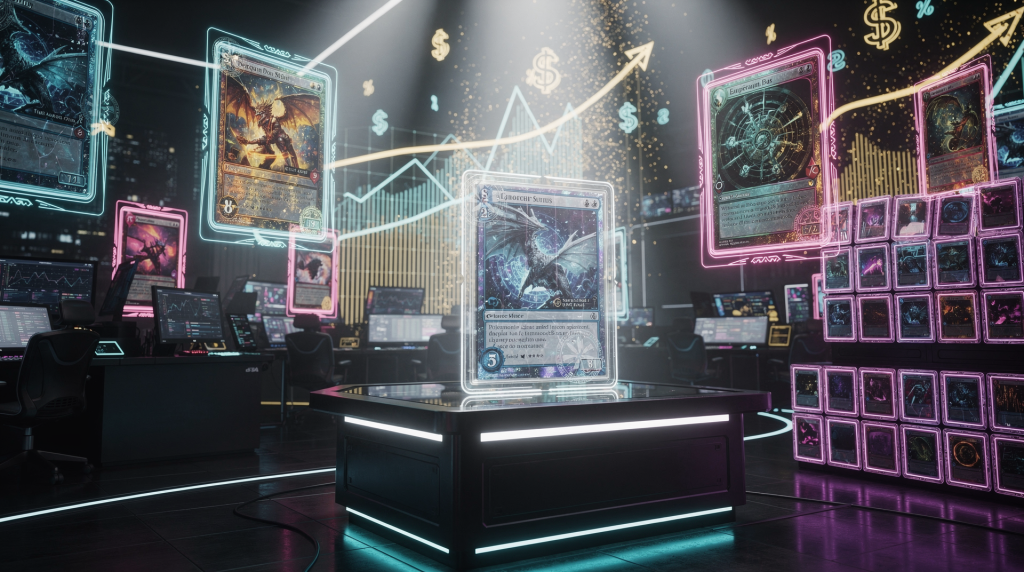
Trading card games have quietly matured into one of the most dynamic alternative asset classes of the decade. From PSA 10 Pokémon holos fetching six figures at auction to sealed Magic: The Gathering Collector Booster boxes trading at premiums of 300% over retail, the market for cardboard is no longer a hobbyist footnote — it is a structured, data-driven investment arena attracting serious capital alongside passionate collectors.
The Story: Why Collectors and Investors Are Both Paying Attention
The convergence of nostalgia, scarcity mechanics, and secondary market infrastructure has transformed trading card games into a legitimate alternative investment vertical. Three major TCG ecosystems are currently generating the most investor interest: Magic: The Gathering, Yu-Gi-Oh!, and Pokémon — each with distinct supply dynamics, collector demographics, and price catalysts that reward informed participants.
Magic: The Gathering’s Collector Booster product line sits at the premium end of the sealed product market. A single case of Collector Boosters for a high-demand set can retail between $800 and $2,400 depending on the release, with secondary market premiums kicking in the moment a set sells through distribution. The appeal is structural: Collector Boosters contain exclusive foil treatments, extended art variants, serialized cards, and Japanese-language alternate art versions that standard Draft Boosters never offer. These variants are the investment-grade product — not the base set cards.
The recently debuted Secrets of Strixhaven set illustrates the thesis cleanly. The set reintroduces the Mystical Archives bonus sheet — a guaranteed alternate-art spell in every booster pack — alongside Japanese foil variants that historically command significant secondary market premiums. Serialized cards within the set are expected to anchor the highest price points, as numbered print runs create inherent scarcity in a product category that otherwise floods the market. One collector’s documented $2,400 single-session opening across Collector Boosters underscores how seriously enthusiasts treat these purchases: the math only works if the pulls justify the outlay, and Mystical Archive hits — particularly Japanese Silver Foils of historically powerful spells — can individually clear $150 to $500 on the open market.
Japanese foil Mystical Archive cards from premium Magic sets have historically commanded 2x to 4x the price of their English-language equivalents, driven by regional scarcity and collector demand from both Western and Japanese markets simultaneously.
Yu-Gi-Oh! Rarity Collection 5: The Reprint Premium Play
Yu-Gi-Oh!’s Rarity Collection product line has become one of the most strategically interesting investment instruments in the TCG space. The fifth installment — designated RA05 — arrives with a confirmed 82-card main pool (RA05-EN001 through RA05-EN082), featuring high-rarity reprints of tournament-staple and collector-grade cards. The Rarity Collection series exists explicitly to give hard-to-obtain cards new premium treatments: Quarter Century Secret Rares, Platinum Secret Rares, and Collector’s Rares that command substantial premiums over their original printings in lower rarities.
The investment angle on Rarity Collection products is a double-edged one. On the bullish side, confirmed inclusion of a card in RA05 in a new high-rarity treatment creates immediate demand from collectors who want the definitive version. On the bearish side, reprints also depress the price of older copies, particularly those sitting in lower rarity formats. Sophisticated holders have learned to front-run RA05 announcements — selling original copies on confirmation of inclusion, then acquiring the new premium version at launch.
Quarter Century Secret Rare variants from the Yu-Gi-Oh! Rarity Collection series have consistently held 60–80% of their launch-week price floors six months post-release, outperforming standard booster rare print rates significantly in long-term value retention.
Key Cards and Sets Driving Investment Value
Exclusive to Collector Boosters in select sets. Iconic spells in Japanese Silver Foil treatment routinely sell between $80 and $500 depending on the card, with Ancestral Recall-adjacent designs at the top of the range.
Numbered serialized variants represent the apex of MTG print scarcity. With print runs often capped at 500 copies globally per design, these cards function as numbered collectibles, not just game pieces.
82-card confirmed pool spanning RA05-EN001 to RA05-EN082. QCS treatment reprints of top-tier staples represent the highest-demand pulls, with individual cards reaching $80–$300 in early secondary market trading.
Base Set and Jungle/Fossil-era holofoils in PSA 10 condition remain the blue-chip tier of the TCG investment market. Population reports showing fewer than 200 PSA 10 copies of key holos sustain five-figure price floors.
The Investment Angle: Sealed Product, Graded Singles, and Market Timing
TCG investing operates across three distinct strategies, each with its own risk and return profile. Sealed product speculation involves purchasing factory-sealed boxes and cases at or near retail and holding for appreciation as print runs sell through and supply dries up. This strategy has delivered outsized returns on sets that became tournament staples or contained chase cards with lasting demand — but it requires significant capital, storage overhead, and patience measured in years, not weeks.
Graded singles represent the most liquid and data-rich end of the market. PSA population reports function like on-chain supply data — they tell you exactly how many copies of a card exist at each grade level. A PSA 10 card with a population of 47 in that grade is a verifiably scarce asset. The grading backlog has shortened considerably across major grading houses, making submission-to-sale cycles more viable for active investors. PSA 10 vintage Pokémon holofoils with sub-200 population counts continue to command premiums that dwarf their raw card equivalents by factors of 10 to 30.
The third strategy — new set arbitrage — involves identifying undervalued pre-order singles and sealed product before a set’s full market impact is understood. Secrets of Strixhaven’s Mystical Archive reprints and Special Guest inclusions (notably the Reserved List card Library of Alexandria making its Arena debut) signal the kind of high-profile card design decisions that historically spike secondary market demand within the first 30 days of release. Moving early on Collector Booster boxes for high-powered sets with confirmed chase cards has returned 40–120% annualized in favorable conditions.
Market Price Timeline: Key Catalysts
-
2020 — Pandemic SurgeThe global lockdown triggered a mass re-entry of adult collectors into the Pokémon and MTG markets. PSA submission volumes increased 400% year-over-year. Vintage Pokémon Base Set holos rose 500–1,000% from pre-pandemic floors within 18 months.
-
2021–2022 — Market CorrectionOverproduction of new Pokémon sets and grading backlogs exceeding 12 months cooled speculative demand. Modern set values normalized. Vintage PSA 10 cards held value while mid-grade modern cards fell 30–60%.
-
2023–2024 — Structural MaturationYu-Gi-Oh!’s Rarity Collection series launches, creating a new premium product tier. MTG serialized cards introduced across multiple sets. One Piece and Union Arena TCGs attract cross-market attention from anime collector bases.
-
2025–2026 — Premium Product DominanceCollector Booster formats, Quarter Century Secret Rares, and serialized variants become the primary investment-grade product category across all major TCGs. Sealed retail arbitrage narrows; graded single and sealed premium box markets deepen.
Emerging Markets: One Piece, Union Arena, and Cyberpunk Red
Beyond the established three, a second tier of TCGs is developing investable secondary markets. The One Piece Card Game has generated sustained demand driven by the franchise’s global fanbase and structured rarity tiers that mirror the Pokémon model — Secret Rares and alternate art treatments on iconic characters commanding $50 to $400 per card in high grade. The market is younger, less liquid, and more volatile, but the fundamental IP strength supports long-term collector interest.
Union Arena, Bandai’s multi-IP card game featuring properties including Bleach, Hunter x Hunter, and Evangelion, targets a collector base that values the IP above the game itself — a dynamic that historically produces strong single-card prices on rare treatments of iconic characters regardless of competitive meta relevance. Cyberpunk Red’s physical card product occupies a niche intersection of tabletop RPG and collectible card game demographics, with limited print runs creating genuine scarcity from day one.
TCG investments carry multi-layered risks that differ fundamentally from traditional asset classes. Publisher reprints can obliterate the value of previously scarce cards overnight — Yu-Gi-Oh! reprints have historically dropped individual card prices by 60–80% within weeks of announcement. Sealed product value is entirely dependent on the contained cards retaining meta relevance or collector demand, neither of which is guaranteed. Grading fraud and counterfeit cards represent real operational risks. Liquidity is limited compared to public equities or crypto; exiting large positions in illiquid cards can require weeks or months. Finally, the TCG space is subject to shifting cultural relevance — a franchise losing its audience can permanently impair card values with no recovery pathway.
Cardboard Alpha: Real Returns, Real Risks, Requires Active Intelligence
The trading card investment market has moved past the speculative frenzy of 2020–2021 and into a more mature, data-driven phase where the edge belongs to collectors who understand print run mechanics, grading population dynamics, and publisher reprint cycles. Sealed premium product — Collector Boosters, Rarity Collection boxes, and limited serialized runs — represents the most defensible long-term position. PSA 10 vintage singles with low population counts remain the blue-chip store-of-value play. New set arbitrage rewards speed and research but punishes passive holders.
Watch for: the full secondary market price crystallization of Secrets of Strixhaven Collector Booster boxes post-release, RA05 price settling on Quarter Century Secret Rare staples 30 days after launch, and whether the One Piece Card Game sustains its 2025 momentum into broader Western retail penetration. The next six months will determine which of the emerging TCG markets graduates from speculative to investable.
This article is for informational purposes only and does not constitute financial advice. Always conduct your own research before making investment decisions.